
Free Printable Nature Journaling Pages for Kids
Use this one-page nature journal printable on homeschool nature walks, backyard observations, and everyday outdoor adventures. Includes two cover pages to choose from so you can bind your own journals at home.

If you’ve ever tried to start a nature journal with your kids, you probably know how easy it is to overcomplicate it. There are countless beautiful notebooks, elaborate drawing prompts, and themed studies out there—but sometimes, the best things are the simplest. That’s why I designed this free nature journal printable: a single-page sheet that helps your child slow down, observe, and document what they notice in God’s creation.
Whether you use it once a week, once a month, or simply whenever the weather is nice enough to head outdoors, this printable is a beautiful way to create lasting memories and help your children build observation skills, attentiveness, and appreciation for the natural world—all without needing an elaborate lesson plan.
Affiliate disclosure: This post may contain affiliate links. As an Amazon Associate this means I will earn a small commission if you choose to purchase through my links. This is at no extra cost to you! Read full disclosure here.
About the Free Nature Journal Printable
This printable is intentionally simple—one sheet, designed to print on standard 8.5×11-inch paper. I recommend printing on heavier paper (like 32 lb or cardstock) if your children like to draw or use watercolors. It includes the following sections:
- When: a space to record the date, time of day, or even the season
- Where: to jot down the location—backyard, park, forest trail, or even a window view
- The weather was: for noting conditions like sunny, cloudy, rainy, or snowy
- Today I saw… a section to sketch, draw, or watercolor what your child noticed
- Notes section: lined space for descriptions, discoveries, or reflections
That’s it. A simple, straight forward way to study nature.

You can print as many copies as you need, hole-punch them for a binder (I recommend a telescoping binder that folds back nicely), or even keep them on a clipboard for on-the-go studies.
You’ll also get 2 cover sheet options to choose from. You can laminate these and make your own journal using an affordable binding machine. Or you can just slide them in the front cover of your binder.
Why Keep a Nature Journal?
For homeschool families, keeping a nature journal blends science, art, and faith beautifully. It encourages your children to look closely, think deeply, and express creatively. Over time, their journal becomes more than a school activity—it becomes a keepsake of their growth and discovery.
Here are just a few of the benefits of keeping a nature journal:
- Observation Skills: Children learn to notice details—patterns in leaves, differences in bird songs, or how clouds move across the sky.
- Writing and Art Practice: Describing what they see builds vocabulary and handwriting, while sketching strengthens fine motor skills and creativity.
- Scientific Understanding: Observing the natural world leads to questions about life cycles, weather, habitats, and ecosystems.
- Mindfulness and Wonder: Nature journaling slows the pace of learning, allowing time for quiet reflection and connection with God’s creation.
Even young children can use this journal by drawing pictures instead of writing. Older students can add Latin names, record measurements, or write short reflections.
This printable grows with your child—it can be as simple or as detailed as you want it to be.
How to Use the Printable
Here are a few easy ways to include the nature journal printable in your homeschool rhythm:
1. Weekly Nature Walks
Choose one day a week to take your lessons outside. Bring your printable, along with a pencil or crayons. Ask each child to find one thing that captures their attention and record it.
2. Backyard Observations
You don’t have to go far! Sometimes nature study plans fall through because we think we need to leave the house. But most of us can observe nature right in our backyard. Children can notice how the same tree changes with each season or how different birds visit the feeder throughout the year.

3. Seasonal Comparisons
Find a location that you’ll be able to visit each season and have your children document how it changes from season to season. We love to pick a tree and observe the changes over all 4 seasons.
4. Rainy-Day Observations
If you were planning a nature study day, but the weather isn’t cooperating, consider making observations from the window or porch. Observe changes in temperature and animal activity.
5. Field Trip Companion
Heading to a botanical garden, farm, nature center, or zoo? Bring your printable along! It’s a wonderful way to encourage kids to engage actively instead of just looking around passively.
What to Observe in Nature (By Category)
Sometimes children (and let’s be honest, adults too!) need a few ideas for what to look for. Nature is overflowing with things to notice, but having categories can help guide the experience. Here are some ideas to help you get started.
Plants & Trees
- Notice the shape and texture of leaves
- Record new buds, blossoms, or falling leaves
- Observe growth on a single tree or flower over time
- Sketch bark patterns or the color of stems
- Collect a fallen leaf or seed pod to tape next to your notes
Insects & Animals
- Watch ants, bees, or butterflies at work
- Listen for birdsong and try to identify who’s singing
- Observe squirrels, rabbits, or deer and note their behaviors
- Look for animal tracks or burrows
- Record any bugs you see under rocks or near flowers
Weather & Sky
- Describe the clouds—fluffy, streaked, or stormy?
- Note wind direction, temperature, and how it feels on your skin
- Record the color of the sky at different times of day
- Watch how shadows change as the sun moves
- Note moon phases or star visibility on clear nights

Water & Ground
- Observe puddles, creeks, ponds, or mud
- Record how water flows after rain
- Note differences in soil (dry, sandy, muddy, rich)
- Sketch reflections in water or ripples from insects and wind
- Watch where moss and ferns grow—usually where it’s damp and shaded
Colors, Sounds & Textures
- Create a color chart of the shades you see in one spot
- Listen for three distinct sounds (birds, wind, water, rustling leaves)
- Feel textures—bark, petals, stones, or grass—and describe them
- Smell the air—can you notice differences after rain or in different seasons?
- Record how sunlight changes the colors of plants or rocks
You might be surprised at how much your children notice when you simply slow down and give them a place to record it.
Tips for Making Nature Journaling a Habit
Here are a few ways to make it simple and consistent:
- Keep supplies handy.
Store a small tote with your printables, pencils, crayons, magnifying glass, and clipboards by the door. When you’re ready to go out, it’s easy to grab and head outside. A field guide to help identify your discoveries on the go is also handy. - Don’t aim for perfection.
Nature journaling is not about pretty drawings or perfect handwriting—it’s about noticing. Some days your page will be full; other days, it’ll just have one sketch. That’s okay. - Make it a shared experience.
Bring your own printable and record your own observations. Kids love seeing that Mom or Dad is noticing too. - Use it with other lessons.
Connect journaling to science (plant life cycles), geography (local habitats), or art (color and texture study).
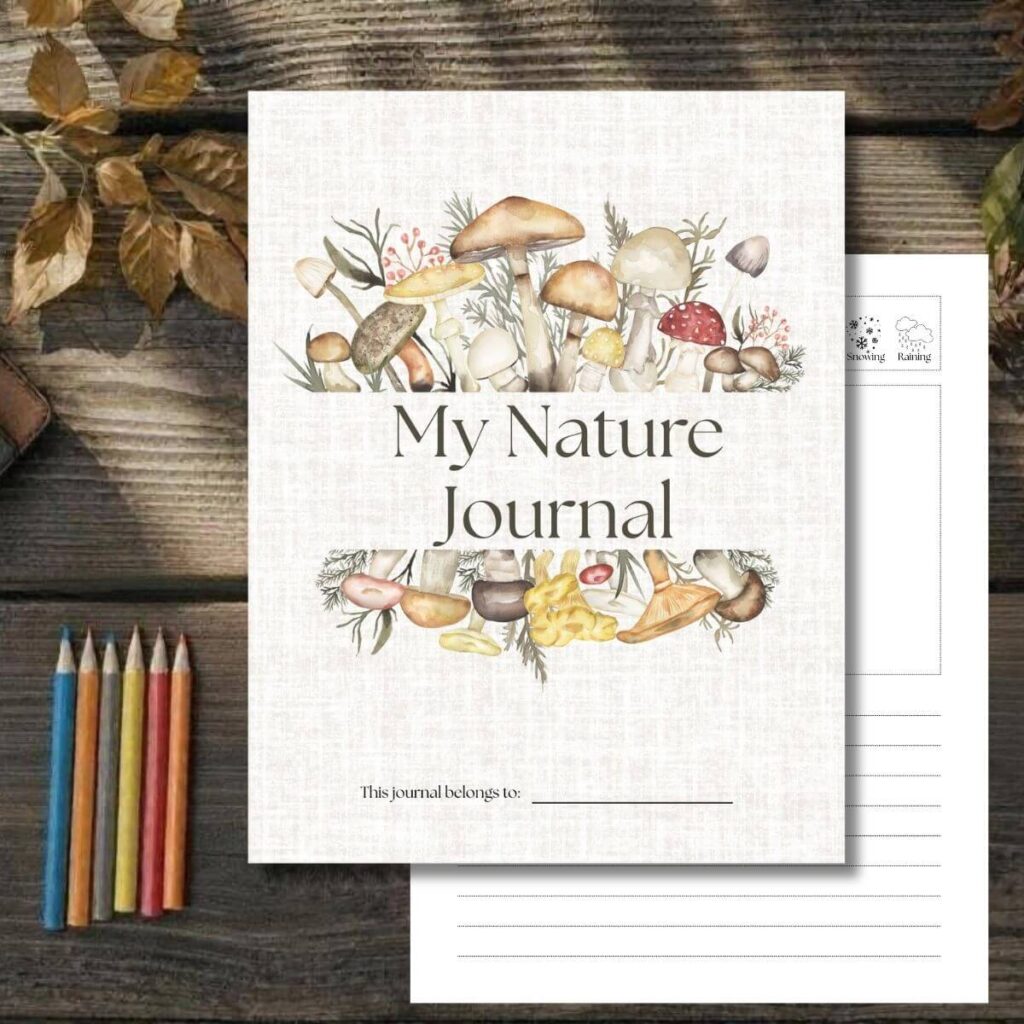
Free Download: One-Page Nature Journal Printable
Ready to start? You can download your Free Nature Journal Printable below, then head over to the Free Printables Archive to see what else you can grab!
Download the Free Nature Journal Printable (PDF)
(8.5×11 inch format — print as many as you need!)
This one-page sheet is perfect for:
- Homeschool nature walks
- Morning time observations
- Seasonal comparisons
- Backyard discoveries
- Outdoor co-op lessons
Use one sheet per child, per outing, or print several and keep them in a Nature Journal Binder to watch your collection grow throughout the year. Enjoy!

These printable nature journaling pages are a great idea to encourage kids to observe and appreciate the outdoors. I plan to use them on our next family hike!