How to Make a Loop Schedule for Your Homeschool (Free Printable)
Have you heard of a homeschool loop schedule, but you have no idea what that means? You’re in the right spot! I’m going to break down what a loop schedule is, and how to best use it in your homeschool.

I’m a big advocate for good schedules. That’s probably no surprise considering the number of printables and posts I have related to the topic on this blog. But I also know that it can be a little confusing to build a schedule, especially for multiple subjects and children, in your homeshool.
So today, I’m going to share one of my favorite ways to structure our homeschool schedule. It allows us to cover a wide range of subjects, without overwhelm. I’ll even throw in a free loop schedule planning page at the end for you!
What is a Homeschool Loop Schedule
There are a few different ways to create a loop schedule. But essentially, a homeschool loop schedule is a simple, flexible way to rotate through subjects.
For example, your loop might include art, music, nature study, geography, and a read-aloud. On Monday, you complete art. Tuesday, music. Wednesday, nature study. If Thursday gets busy or doesn’t happen, you don’t skip anything—you just pick up with geography the next time.
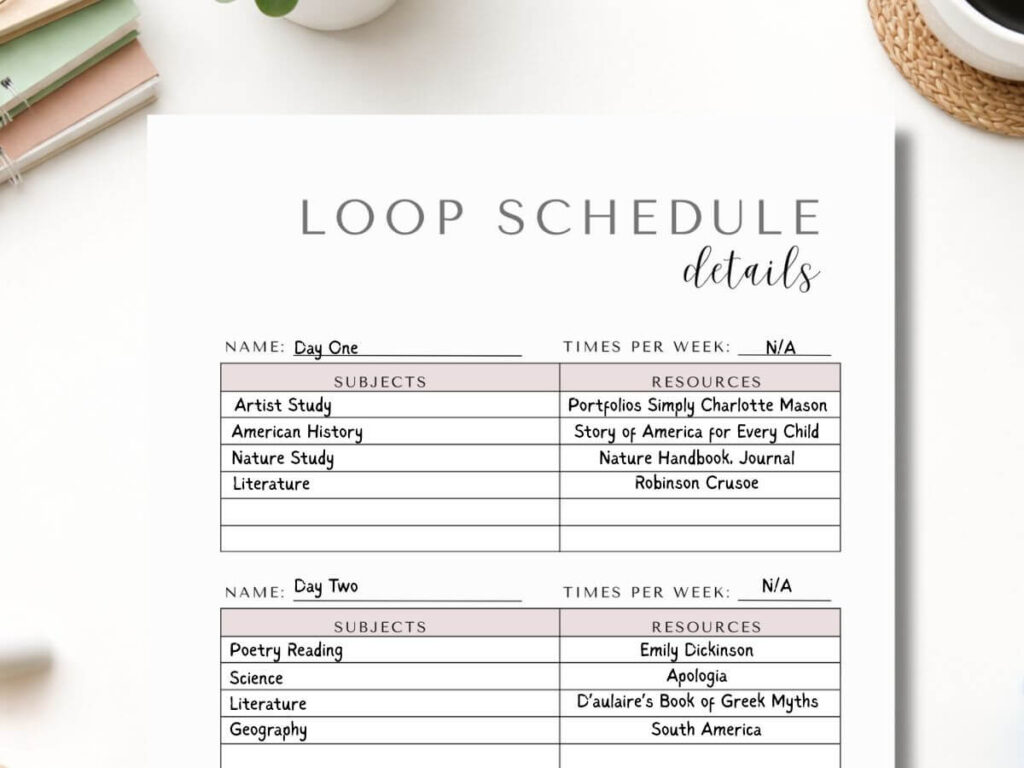
You may also choose to have daily loops. For example, Day One of your week consists of core subjects, history lessons, nature study, and literature. Day Two may be core subjects, science, a different literature reading, and geography. Day Three could be core subjects, foreign language, and citizenship. Once you’ve gone through all 3 days, start back at Day One.
Benefits of a Loop Schedule
There are a lot of benefits to a well thought out loop schedule, but here are some of my top reasons:
- Allows you to cover a variety of subjects that you may not be able to get to on a daily basis.
- Gives you peace of mind knowing that you aren’t “missing” anything if you are unable to do lessons one day. You’ll just pick up where you left off.
- Builds consistency in subjects that tend to get pushed aside.
Subjects to Put on a Loop Schedule
Not every subject needs to be on a loop schedule. Certain subjects in your home will be covered daily. In our home, I call these our “core subjects”. It includes things like math, language arts, and reading.
Here are subjects that are frequently put into a loop:
- Enrichment Studies: Things like artist study, composer study, poetry reading, hymns etc. can easily be combined into a “morning time” style loop.
- Literature Readings: If you have multiple styles of literature you are reading from, say one selection for tales, one for Shakespeare, and another classic w, you can rotate through them.
- History & Science: Rotating days for history and science is a great way to frequently visit the subjects, without overwhelming your schedule.
- Geography, Citizenship, etc: These areas of study are important, but often don’t need to be done on daily basis. Any subjects that you don’t need to complete daily, make an excellent option to combine in a loop.
Be sure to check your state homeschool laws for any requirements on how frequent you have to study certain subjects.
Supplies Needed
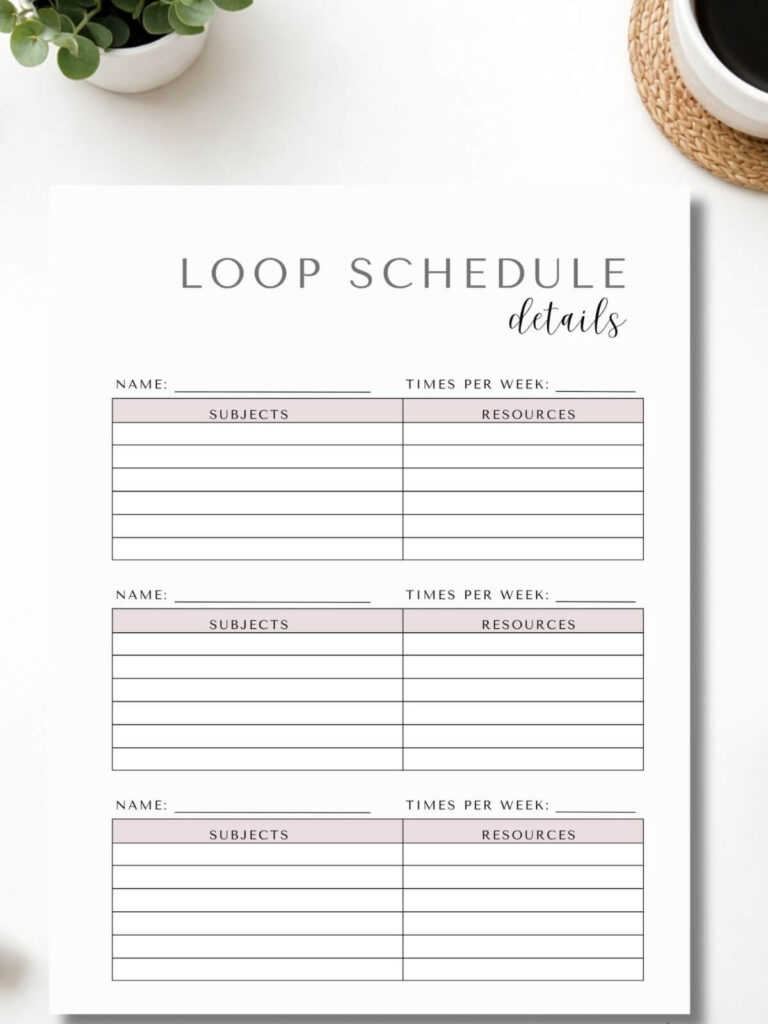
As far as supplies goes, you just need some paper and a pen for brainstorming and playing around with the schedule. Or, just grab the simple planning template at the end of the post.
Step One
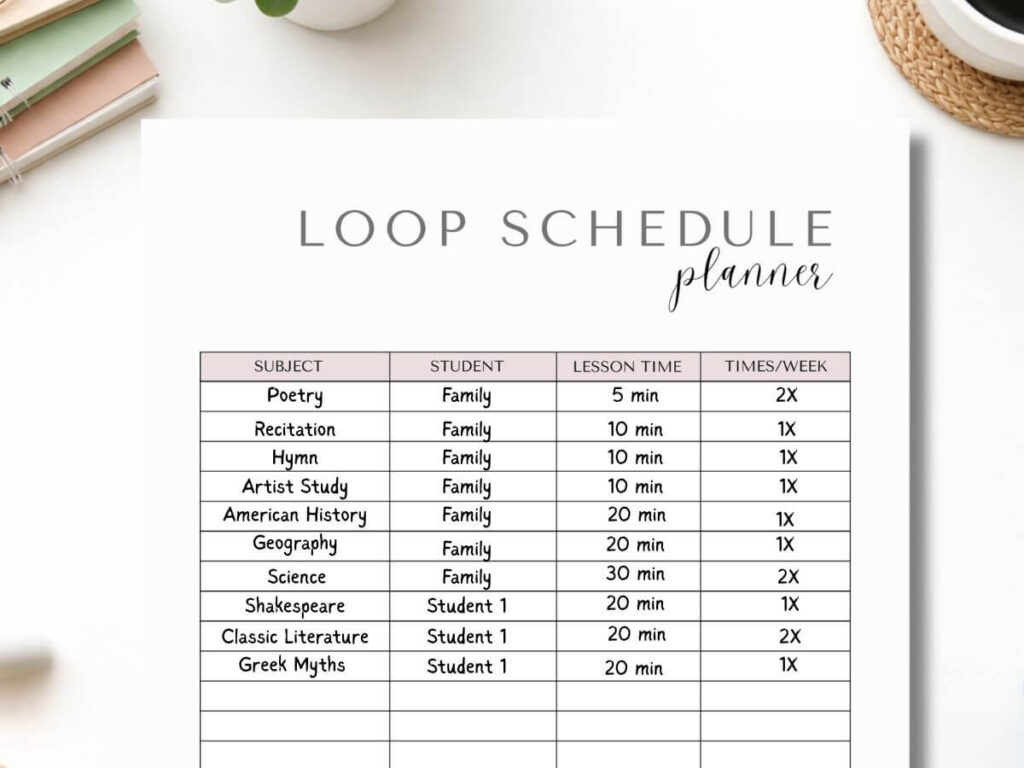
Decide what subjects you’ll be including in your loop schedules. List out each subject, the number of times per week you want to cover that subject, and the length of time for each lesson.
Having the lesson length is helpful for keeping a balance to your day. Instead of assigning all of your longer lessons to one day, you can balance shorter lessons with lengthier ones.
You should also list out if this is subject is for an individual student or for the family. You’ll see a column for this one the loop planning printable I’ve created.
Step Two
Once you have your subjects listed out, it’s time to actually build your loop(s).
Start by grouping similar subjects together. For example, you might create one loop for morning time (things like poetry, hymns, and read-alouds), and another loop for independent or table work (like science, history, and geography).
Then, simply place your subjects in the order you want to complete them. If you listed certain subjects multiple times per week in Step One, just add them into your loop more than once. Here’s an example of what that may loop like.

Step Three
Now you just need to decide when your loop(s) will happen each day. In your weekly schedule, just write in “Loop One” (or whatever you name your loop) on all days that you’ll be covering it. I keep a separate list of what each loop consists of, so that I can easily see what comes next.
If you don’t have a weekly schedule, head over to these posts to grab free homeschool scheduling printables to get started!
Get your free, two page, printable homeschool loop planner here!
